
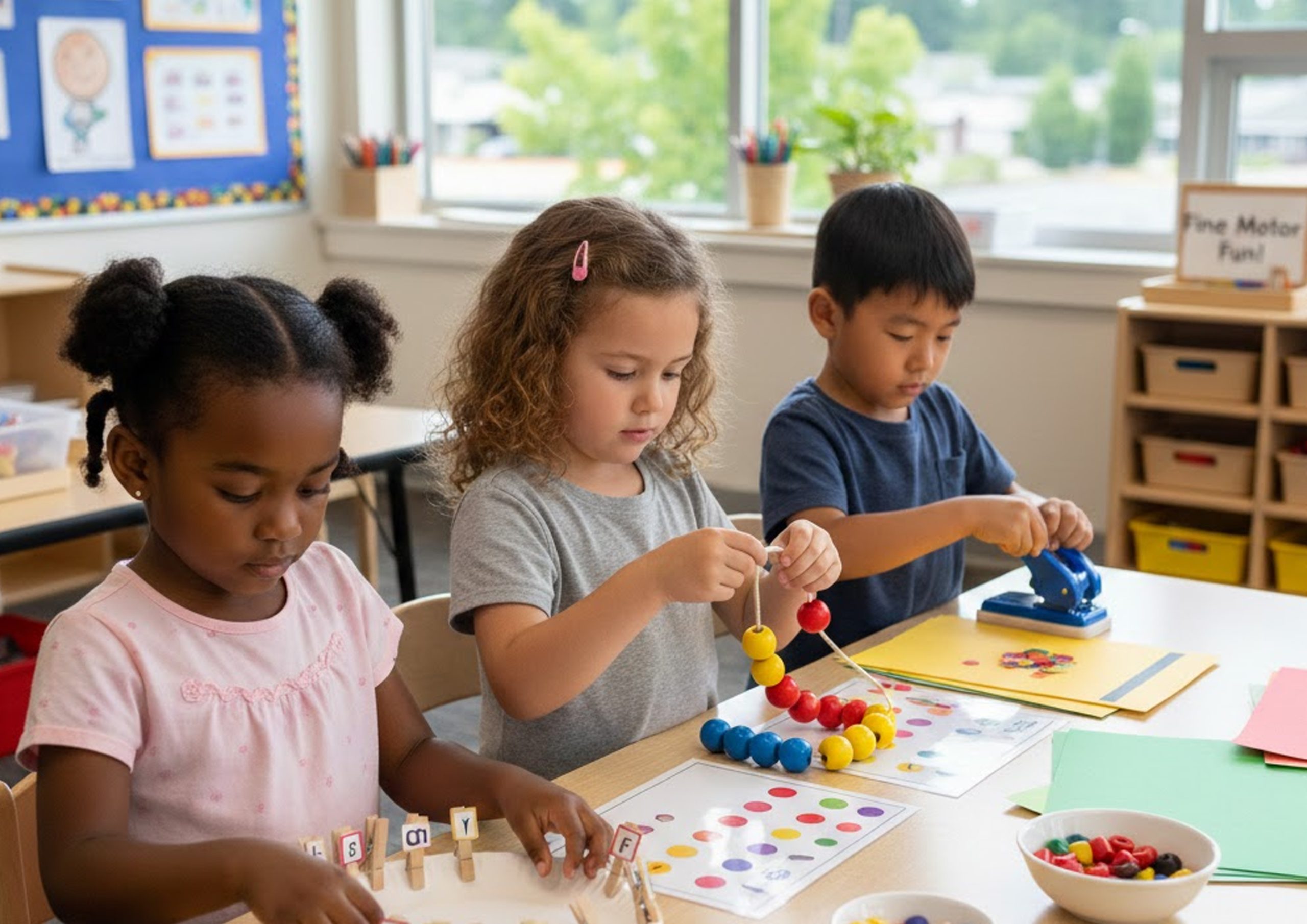
Strong little hands build confident learners. In our Bellevue preschool and pre-K classrooms, fine motor stations are an essential part of daily learning. Activities with clips, beads, and hole punchers may look simple — but they play a powerful role in preparing children for writing, independence, and kindergarten readiness.
At Lil’ People’s World, serving families in North Seattle, Bellevue, Kirkland, and nearby Eastside communities, our research-based Creative Curriculum ensures that fine motor development is woven into everyday experiences across infant care, toddler programs, preschool, and pre-K classrooms.
Why Fine Motor Skills Matter
Fine motor skills involve the small muscles in the hands and fingers. These skills are necessary for:
- Holding a pencil correctly
- Cutting with scissors
- Buttoning jackets
- Zipping backpacks
- Tying shoes
- Opening lunch containers
Before children can write letters and numbers confidently, they must first develop hand strength and coordination.
What Are Fine Motor Stations?
Fine motor stations are intentionally designed areas where children strengthen hand muscles through playful, hands-on activities. Instead of worksheets, children rotate through engaging tasks that build endurance and control.
In our Bellevue classrooms, these stations often include clips, beads, and hole punchers — materials that naturally build precision and grip strength.
Clothespin & Clip Activities
Clips and clothespins are excellent for strengthening the pincer grasp — the same grip needed for writing.
Children might:
- Clip clothespins around a paper plate
- Match colored clips to color cards
- Clip letters to their matching sounds
- Attach numbered clips in order
These activities build:
- Finger strength
- Hand-eye coordination
- Early math and literacy connections
They also support bilateral coordination (using both hands together).
Beading for Coordination and Focus
Beading activities help children refine precision and concentration.
At a fine motor station, children may:
- String large wooden beads
- Create color patterns
- Count beads as they string
- Follow simple pattern cards
Beading strengthens:
- Fine motor control
- Visual tracking
- Pattern recognition
- Patience and persistence
These foundational skills directly support kindergarten readiness.
Hole Punching for Hand Strength
Hole punchers are a classroom favorite because they build significant hand strength.
Children can:
- Punch holes along drawn lines
- Create decorative borders
- Follow shape outlines
- Make “lacing cards” for later use
This activity strengthens the muscles needed for sustained writing and cutting tasks in elementary school.
Signs Your Child Is Developing Strong Fine Motor Skills
You may notice your preschooler:
- Holds a crayon with control
- Buttons clothing independently
- Cuts along a simple line
- Strings beads with minimal assistance
- Uses tools like tweezers or tongs confidently
These milestones show growing hand strength and coordination.
How Fine Motor Skills Support Kindergarten Readiness
Kindergarten teachers value children who can:
- Write their name with control
- Cut shapes with scissors
- Manage personal belongings independently
- Complete tabletop tasks with endurance
Fine motor stations build the stamina and confidence children need for classroom success.
Creating Fine Motor Stations at Home
Families in Bellevue and surrounding Eastside communities can easily set up simple fine motor activities at home.
Try:
- A bowl of clothespins and cardboard
- Large beads and shoelaces
- Paper and a child-safe hole punch
- Tweezers and pom-poms
- Playdough with small tools
Keep materials accessible and rotate options to maintain interest.
Frequently Asked Questions
How often should children practice fine motor activities?
Short daily sessions are ideal. Even 10–15 minutes can build meaningful strength over time.
What if my child avoids fine motor tasks?
Start with playful, low-pressure activities and gradually increase challenge.
Are worksheets enough for fine motor practice?
Worksheets alone are not sufficient. Hands-on, three-dimensional activities are more effective at building muscle strength.
Why Families Choose Lil’ People’s World
Families across Bellevue, North Seattle, Kirkland, and nearby Eastside communities choose us because we provide:
- Family-owned care since 1993
- Licensed and insured facilities
- Low teacher-to-child ratios
- Research-based Creative Curriculum
- Safe, clean learning environments
- Programs from infant care through pre-K and before and after school care
- Strong communication and family partnerships
Our classrooms are intentionally designed to nurture independence, confidence, and school readiness at every stage.
Building Strong Hands for Bright Futures
Clips, beads, and hole punchers may seem small — but the skills they build are powerful. Through consistent, hands-on practice, children develop the strength and coordination they need for writing, independence, and lifelong learning.
If you’re exploring preschool or childcare options in Bellevue or the surrounding Eastside communities, we’d love to show you how our fine motor stations support your child’s growth.


