
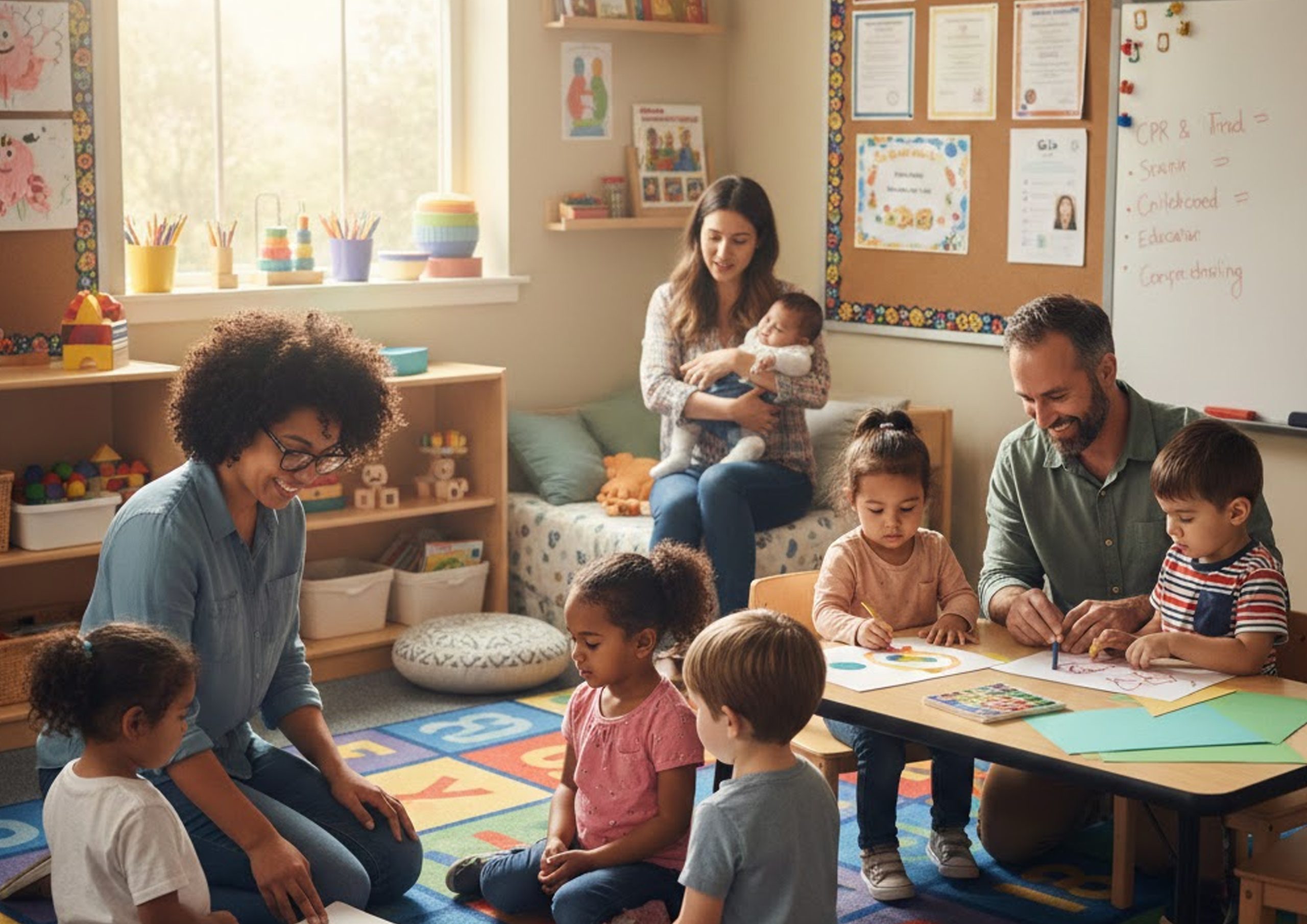
High-quality childcare and preschool programs rely on one essential element: well-trained, dedicated teachers. For families in Bellevue, choosing the right early learning center often begins with understanding who is guiding their child’s growth each day.
At Lil’ People’s World — serving North Seattle, Bellevue, Kirkland, and nearby Eastside communities — our teachers are the heart of our programs. From infant care to pre-K, we maintain high standards for training, qualifications, and ongoing professional development so every child receives safe, nurturing, and developmentally appropriate care.
Below is a clear look at what families can expect when it comes to early childhood teacher qualifications in Bellevue and the greater Eastside.
The Foundation: Required Credentials for Bellevue Childcare Teachers
Teachers in licensed Washington State childcare centers follow state-mandated qualifications designed to ensure safety and promote early learning. These requirements support quality across infant care, toddler programs, preschool, pre-kindergarten, and before and after school care.
Core Training Requirements
All early learning educators complete:
- State background checks
- CPR, First Aid, and Bloodborne Pathogens certification
- STARS (State Training and Registry System) training — including at least 30 hours of foundational coursework
- Safe sleep training for infant teachers
- Food handler permits where required
These foundational trainings ensure teachers can confidently support children’s health, safety, and daily routines.
Education and Early Learning Expertise
Many Bellevue-area teachers bring additional education and credentials, including:
- Early Childhood Education (ECE) certificates
- Associate or Bachelor’s degrees in ECE or related fields
- Specialized training in child development, behavior guidance, or emergent literacy
At Lil’ People’s World, educators are trained in the Creative Curriculum, a research-based framework that supports exploration, social-emotional development, and kindergarten readiness.
Ongoing Professional Development: Why It Matters
Washington State requires regular professional development, but high-quality early learning centers go beyond the minimum.
Continuous Training at Lil’ People’s World Includes:
- Annual STARS continuing education
- Workshops on social-emotional learning and behavior support
- Curriculum-based training aligned with Creative Curriculum
- Classroom coaching and peer mentorship
- Health, safety, and environmental training updates
This commitment to professional growth ensures teachers stay informed about best practices and new research in early childhood education.
Why This Benefits Children:
- More responsive and intentional teaching
- Stronger support for communication and problem-solving
- Better preparation for kindergarten
- Improved classroom routines and transitions
Experience Matters: Nurturing Teachers at Every Age Level
We match teacher qualifications and strengths to developmental stages, ensuring that each child receives the right type of care and guidance.
Infant Teachers
Specialize in:
- Responsive caregiving
- Safe sleep and feeding routines
- Attachment-building and communication cues
Toddler Program Teachers
Focus on:
- Language development
- Social skills
- Exploration through movement and sensory play
Preschool and Pre-K Teachers
Expertise in:
- Early literacy and math foundations
- Creative Curriculum lesson planning
- Kindergarten readiness skills
Before and After School Educators
Support:
- Homework help
- Social-emotional learning
- Enrichment activities
Experienced teachers create stability, comfort, and emotional security — essential factors for early learning success.
Family Communication: A Key Part of Teacher Training
Strong communication builds trust. Our educators use training in family partnerships to ensure:
- Daily updates and activity reports
- Supportive conversations about milestones and behavior
- Collaborative learning plans
- Transparent safety and classroom practices
Parents in Bellevue, North Seattle, and Kirkland appreciate knowing what their child experiences each day — academically, socially, and emotionally.
What Sets Lil’ People’s World Teachers Apart?
Families searching for the best preschool in Bellevue, a trusted North Seattle childcare center, or a nurturing Kirkland early learning program often choose us because our teachers consistently demonstrate:
- Warm, responsive interactions
- Strong knowledge of child development
- Professional integrity and reliability
- Passion for early learning and family support
- Commitment to ongoing education
- A safe, clean, and well-maintained environment
As a family-owned early learning center since 1993, we invest heavily in our staff — because high-quality teachers build high-quality classrooms.
How Families Can Learn More About Teacher Qualifications
When touring any early learning center, consider asking:
- What training do your teachers receive each year?
- How long has your staff been with the center?
- What curriculum do you use to guide instruction?
- How do teachers communicate with families?
At Lil’ People’s World, we welcome these questions and provide clear, transparent answers.
Frequently Asked Questions
Do all teachers need formal degrees?
Not always, but Washington State requires core ECE training, and many of our educators have certificates or degrees that enhance their classroom expertise.
How often do teachers receive training?
Teachers complete ongoing STARS courses annually, plus internal training opportunities throughout the year.
How do I know my child’s teacher is qualified?
Licensed childcare centers maintain staff training records, updated certifications, and ongoing assessment of classroom practices.
Are substitute teachers trained too?
Yes. Substitutes and float staff complete the same safety and foundational training as lead teachers.
High-quality childcare begins with skilled, caring, and well-supported educators. Families in Bellevue and the Eastside trust Lil’ People’s World because our teachers bring professionalism, passion, and consistent growth to every classroom — from infants to pre-K.


