
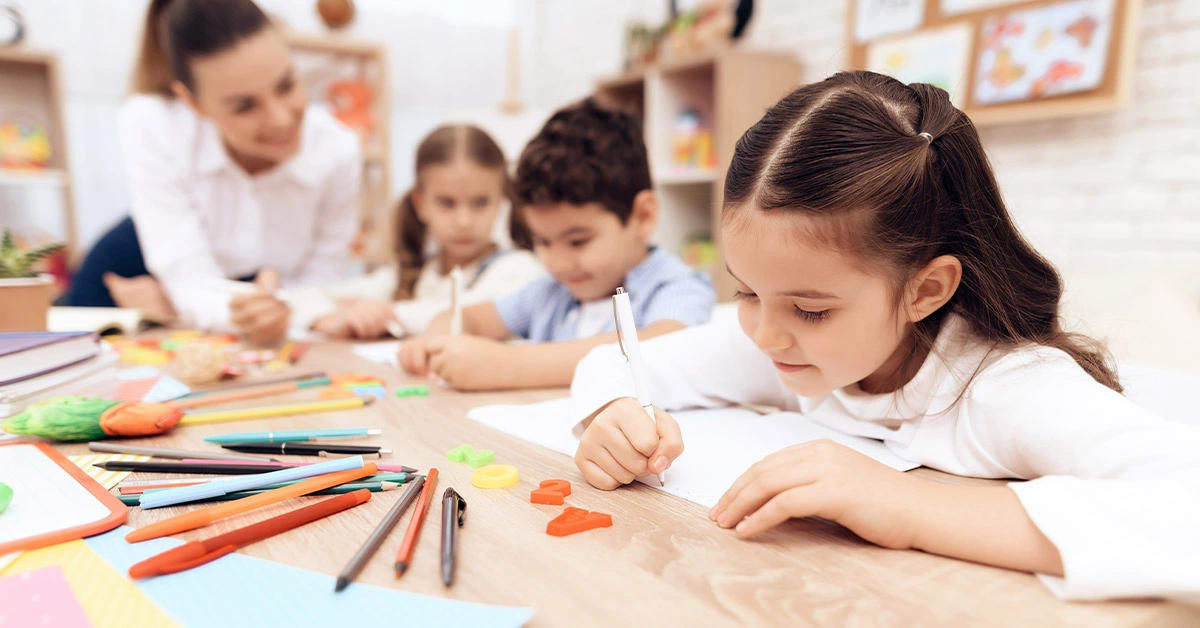
Is your child kindergarten ready? Many Seattle-area parents ask this question as the first day of school draws closer. It is one of the most common concerns we hear from families.
Kindergarten readiness means more than knowing letters and numbers. It involves social, emotional, physical, and cognitive growth. Therefore, it covers the whole child, not just academics.
At our centers in North Seattle, Bellevue, and Kirkland, we help families understand what readiness truly looks like. Below, we break it down in simple terms you can use right away.
What Does Kindergarten Readiness Really Mean?
Kindergarten readiness describes the skills a child needs to thrive in a classroom. However, it is not about hitting a single milestone. Instead, it reflects steady growth across several areas.
Children develop at their own pace. Because of this, readiness looks different for every child. As a result, comparing kids rarely helps families feel confident.
Teachers and parents work together to spot strengths and growth areas. Additionally, they nurture skills through everyday play and routines. This shared approach builds confident, capable learners.
The Five Areas of Readiness
Most early childhood educators focus on five core areas. Each one supports a child’s success in different ways.
- Social skills: Sharing, taking turns, and making friends.
- Emotional skills: Managing feelings and handling separation.
- Language skills: Listening, speaking, and following directions.
- Physical skills: Running, holding a pencil, and using scissors.
- Cognitive skills: Counting, sorting, and recognizing patterns.
For example, a child who shares toys is building social readiness. Meanwhile, a child who scribbles names is developing early writing skills.
Social and Emotional Readiness
Social and emotional growth often matters most in kindergarten. Therefore, it deserves special attention at home and in care.
Children must learn to separate from parents calmly. Additionally, they need to express needs with words instead of tears. These skills help them feel safe at school.
Strong friendships also build confidence. As a result, children who play well with others adjust faster. Our teachers model kindness and patience every day.
How to Support These Skills at Home
Parents play a powerful role in emotional growth. Try these simple, everyday strategies.
- Name feelings out loud during daily moments.
- Practice short goodbyes to build trust.
- Encourage playdates with neighbors and friends.
- Read books that explore big emotions together.
First, stay calm during drop-offs. Next, celebrate small wins like sharing a snack. Then, watch your child’s confidence grow.
Academic and Cognitive Readiness
Academics matter, but they are only one piece. Moreover, young children learn best through play, not worksheets.
Kindergarten-ready children often recognize some letters and numbers. However, they do not need to read or write fluently. Curiosity matters far more than memorization.
We believe children learn through hands-on discovery. For example, building blocks teach counting and patterns. In addition, dramatic play builds language and problem-solving.
Simple Ways to Build Early Skills
You can support learning without flashcards or pressure. Try weaving skills into your daily routine.
- Count stairs, snacks, and toys throughout the day.
- Sing songs that rhyme and repeat sounds.
- Sort laundry by color or size together.
- Read aloud every day, even for a few minutes.
You can explore our play-based programs to see how this works in action. Our teachers create developmentally appropriate experiences for every age.
Physical Readiness and Independence
Physical skills support classroom learning too. Therefore, fine and gross motor growth both matter.
Fine motor skills help children hold crayons and use scissors. Meanwhile, gross motor skills support balance and active play. Both develop through movement and practice.
Independence also builds readiness. Children who manage simple tasks feel proud and capable. As a result, they enter kindergarten with greater confidence.
Independence Skills to Practice
Self-help skills ease the transition to a full classroom. Encourage these habits gently at home.
- Putting on coats and shoes independently.
- Using the bathroom without much help.
- Washing hands and cleaning up toys.
- Opening lunch containers and snack bags.
Start small and stay patient. Furthermore, offer praise for effort rather than perfection. Practice builds lasting independence over time.
Kindergarten Readiness Across the Seattle Area
Families across Washington share the same goal. They want their children to feel confident and prepared.
In North Seattle, Bellevue, Kirkland, and nearby Redmond, schools value the whole child. Therefore, social and emotional growth carry real weight. Local kindergarten programs build on these foundations.
Quality early learning makes a meaningful difference. Because of this, choosing the right child care center matters. A warm, play-based environment helps children thrive.
Why Play-Based Learning Helps
Play is the natural way children explore the world. Moreover, it builds skills across every readiness area at once.
For example, a pretend grocery store teaches counting and conversation. In addition, it builds teamwork and creativity. As a result, children learn deeply without realizing it.
You can learn more about why play matters from the National Association for the Education of Young Children. Their research highlights the value of play-based learning.
How to Know If Your Child Is Ready
Many parents worry they will miss the signs. However, readiness usually shows up in everyday moments.
Watch how your child interacts and communicates. Then, notice their curiosity and independence. These clues reveal growing readiness over time.
Remember, every child develops differently. Therefore, trust your instincts and lean on trusted teachers. They can offer helpful, personalized insight.
Signs of Growing Readiness
- Follows simple two-step directions.
- Separates from caregivers with growing ease.
- Shows interest in books, letters, and numbers.
- Plays cooperatively with other children.
- Expresses needs and feelings using words.
If you have questions, we are happy to help. Contact the Lil’ People’s World team to learn more about your child’s progress.
Frequently Asked Questions
At what age should my child start kindergarten?
In Washington, children usually start kindergarten at age five. However, readiness depends on more than age. Therefore, consider social and emotional growth too.
Does my child need to read before kindergarten?
No, reading is not required before kindergarten. Instead, focus on letter recognition and a love of books. Curiosity matters more than fluency.
What if my child seems behind in some areas?
Try not to worry, because children develop at different paces. Additionally, targeted play and support help close gaps. Talk with your child’s teacher for guidance.
How does preschool support kindergarten readiness?
Preschool builds social, emotional, and academic skills daily. Moreover, it offers structure and routine. As a result, children transition more smoothly.
Can I prepare my child at home?
Absolutely, everyday moments offer rich learning. For example, read, count, and talk together often. These simple habits build strong foundations.
Helping Your Child Thrive in the Seattle Area
Kindergarten readiness is a journey, not a single test. Therefore, focus on steady growth across all areas. With support, your child can flourish.
At Lil’ People’s World, we have nurtured young learners since 1993. Our caring teachers in North Seattle, Bellevue, and Kirkland support each child’s whole development. Furthermore, we treat every center as a home away from home.
Ready to take the next step? Schedule a tour today and see our warm, play-based environment in person. We would love to welcome your family.


